
Research brief · Technology, aerospace & the enterprise
The AI judgment gap in the enterprise.
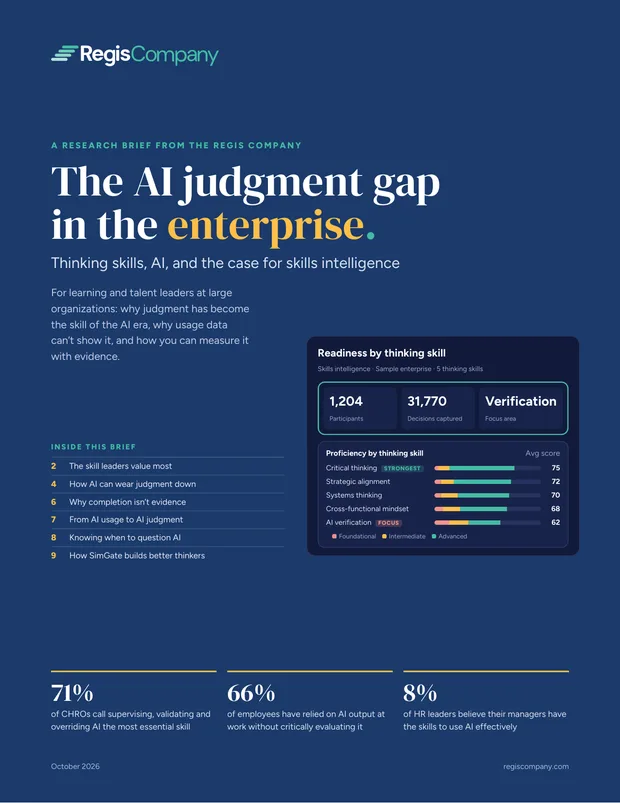
AI now drafts, analyzes, and recommends across your business, and most dashboards count how often people use it. This brief shows why judgment has become the skill of the AI era, why usage data can’t show it, and how you can measure it with evidence.
Inside the brief
- Why leaders now rank judgment among the skills they value most
- New research on what happens to accuracy and confidence when AI advice is wrong
- Why usage counts and completion records say little about AI judgment
- Why knowing when to question an AI answer can be practiced, and how that practice produces evidence
- 71%of CHROs call supervising, validating, and overriding AI the workforce’s most essential skillIBM Institute for Business Value, 2026
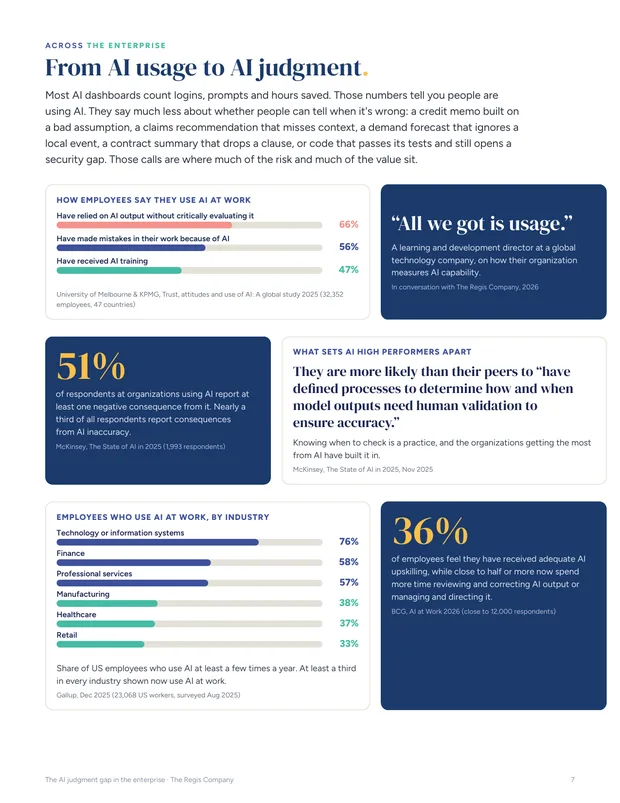
- 66%of employees have relied on AI output at work without critically evaluating itUniversity of Melbourne & KPMG, 2025
- 51%of respondents at organizations using AI report at least one negative consequence from itMcKinsey, The State of AI in 2025
A look inside the brief.
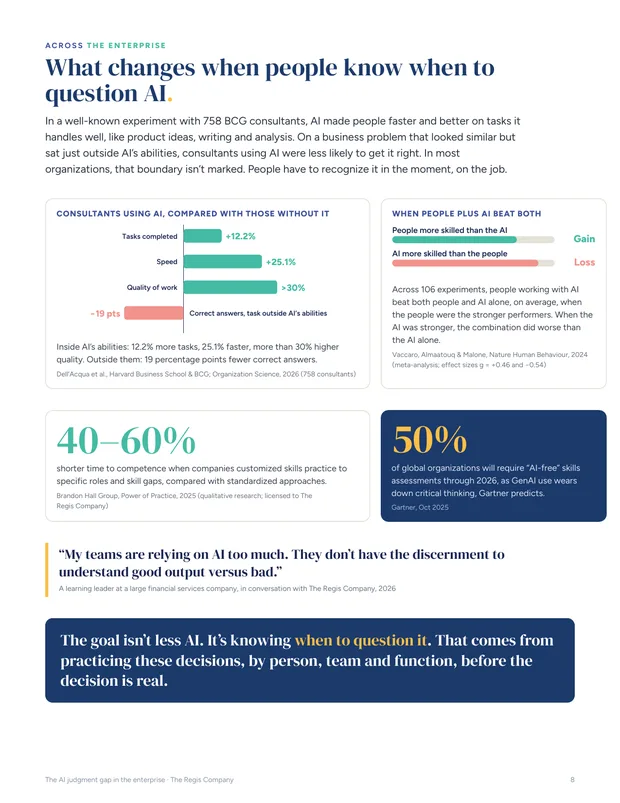
When AI advice was wrong, people in the studies became less accurate and more confident. Read a few sample pages to see what the research found, and how practice builds the judgment your people need to know when to question an answer.
Click a page to read it.
The goal isn’t less AI. It’s knowing when to question it.
50+ industry awards.
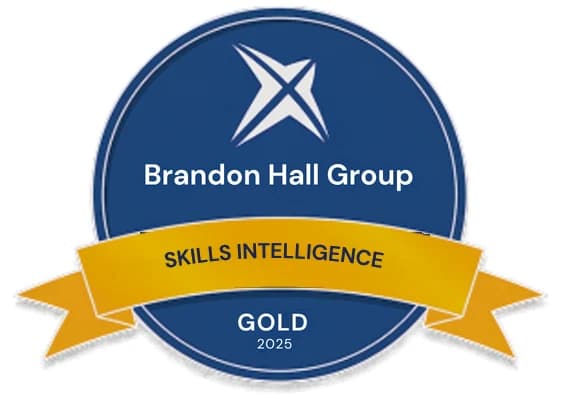
These include three Brandon Hall Group Gold awards in 2025 (Skills Intelligence, Leadership Development, and Simulation Technology) and a place on Training Industry’s Top 20 Experiential Learning Technologies list in 2025 and 2026.
Get the brief.
The research, the experiments, and a practical look at how you can see, with evidence, which of your people know when to question an AI answer.
Send me the brief